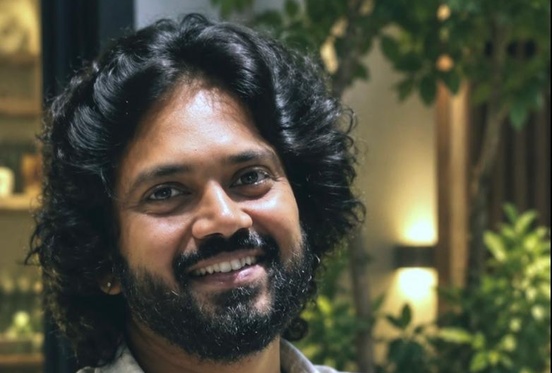
What happens to a customer relationship after the deal is signed? Tanaya Pal shares lessons from 14+ years across sales, strategic customers and CS operations, from setting the right expectations to taking ownership when things don’t go as planned.
If you’ve ever wondered what happens to a customer relationship after the deal is signed, Tanaya Pal has seen it from almost every angle.
With 14+ years across sales, strategic customers and CS operations, Tanaya brings a rare end-to-end view of the customer journey. As Director of Global CS Ops & Strategic Customers at Conversive, she works closely with customers and teams to understand what drives successful relationships and where things can go wrong.
In this conversation, she shares lessons from difficult customer conversations, the operational changes that can have an outsized impact, and what it takes to build stronger customer relationships as expectations continue to change.
Let’s get into it.
1. You’ve spent 14+ years working across sales, strategic customers, and CS operations. What’s one thing about customers that you understand very differently today than you did when you started?
When I started, I thought customer satisfaction was largely about having a good product and responding quickly when there was a problem. Over the years, I’ve realised it is much more about understanding the customer’s business and being aligned to what they are trying to achieve.
Customers don't necessarily expect everything to be perfect, but they do expect you to understand their priorities, anticipate challenges, and be transparent when something doesn't go as planned. The strongest relationships I’ve built have come from being a partner to the customer rather than just a vendor.
2. You’ve been on the sales side and now work closely with strategic customers. What do you think sales teams sometimes misunderstand about what happens after the deal is signed?
One of the biggest misunderstandings is that the sale is the beginning of the customer relationship, not the end of it.
A deal may be signed based on a particular set of expectations, timelines, use cases, integrations, and commercial assumptions. Once implementation starts, all of those things become real for the customer. Small gaps in what was communicated during the sales process can become significant challenges later.
The best sales teams I’ve worked with stay close to the customer post-sale, make sure expectations are realistic, and involve the right internal teams early. It makes the transition much smoother for everyone.
3. Customer expectations have changed dramatically over the last decade. What are customers asking for today that would have seemed unusual when you started your career?
Customers today expect speed, transparency, flexibility and self-service in a way that was much less common when I started. Earlier, customers were often happy with a periodic review or a report once a month. Today, they want real-time visibility into usage, billing, delivery, performance and ROI. They also expect solutions to integrate easily into their existing technology stack and adapt to changing business requirements.
There is also a much stronger expectation that technology providers should understand the customer's broader business use case, rather than just provide a product.
4. When a customer isn't getting the value they expected, how do you figure out whether the real problem is the product, the process, the people, or simply the expectations that were set at the beginning?
I try not to jump to conclusions. I go back to the beginning and ask a few basic questions: What did we promise? What did the customer expect? What did they actually implement? And what is happening in reality?
Once you map those four things against each other, the gap usually becomes clearer.
Sometimes it's a product limitation. Sometimes the product can do it, but the process hasn't been set up correctly. Sometimes users aren't adopting it properly. And sometimes, quite honestly, the expectation was never realistic to begin with.
The important thing is to identify the root cause without becoming defensive. Once you agree on the actual problem, finding a solution becomes much easier.
5. What’s one customer conversation from your career that taught you something you still use today?
One thing I’ve learned from several difficult customer conversations is that customers don't always need an immediate answer, they need to know that someone is taking ownership.
There have been situations where we couldn't immediately fix the issue or give the customer the answer they wanted. What made the difference was being clear about what we knew, what we didn't know, what we were doing about it, and when we would come back with an update. That has stayed with me throughout my career: never leave a customer wondering who owns the problem.
6. From an operations perspective, what is one small change or process improvement that can have a surprisingly big impact on customer experience?
I would say clarity of ownership and communication. A simple process where every customer issue has a clear owner, a clear next step, and a clear timeline can dramatically improve the experience. It sounds basic, but in complex organisations, customers can quickly get frustrated when they have to repeat the same issue to multiple teams.
Good internal processes may not always be visible to the customer, but the absence of them definitely is.
7. Finally, if you could give business leaders one piece of advice about preparing for the future of customer engagement, what would it be?
I would say, don't think about customer engagement purely as a channel or a technology decision. Think about it as an experience. Customers will continue to expect more channels, faster responses, more automation and greater personalisation. But adding more technology doesn't automatically create a better customer experience.
The companies that will do well are the ones that connect technology, data, people and processes around the customer's journey. The technology will keep changing, but the need to understand the customer and make their experience easier will remain constant.

Rapid Replies:
One word that describes a great customer relationship?
Trust. You can’t shortcut it, automate it, or fake it.
One person, living or dead, you’d love to have lunch with?
Indra Nooyi. I’d love to hear how she balanced ambition, leadership, and staying grounded while operating at that scale.
If you were giving a TED Talk next year, what would it be about?
People Buy From People Who Listen.
If you weren't working in CS, what would you be doing?
Probably teaching. I’ve always enjoyed turning experience into something someone else can use.
A big thank you to Tanaya for letting us get to know the person behind the title a little better. From her journey across sales and customer success to the perspective she brings to her work today, there’s a lot that makes her story worth hearing. We’re lucky to have her as part of the Conversive team.


.avif)