.png)
Patient conversations often break across web, phone, WhatsApp, and patient portals, leading to lost appointments and revenue. Learn how the Continuous Conversation Principle keeps every inquiry connected, accountable, and moving toward a booked appointment or documented outcome.
Highlights:
- Healthcare organizations lose revenue because patient conversations break across channels before appointments are booked.
- Simply connecting communication channels into a unified inbox improves visibility, but it does not ensure every patient inquiry reaches a successful outcome.
- The Continuous Conversation Principle keeps every patient conversation connected across web, phone, WhatsApp, email, and portals with one owner and one measurable outcome.
- Common hand-off gaps, such as after-hours inquiries, portal login barriers, and disconnected channel switches, silently reduce appointment conversions and leave clinical capacity underutilized.
- Conversive helps hospitals protect already-paid-for demand by enabling connected patient conversations: ensuring every patient inquiry is continuously tracked, followed up, and resolved into either a booked appointment or a documented reason for non-conversion.
Every healthcare system that has invested in patient communication over the last five years has done roughly the same thing, that is, added a channel. A web chat widget. A WhatsApp line. An online booking form. A patient portal. Each addition was reasonable on its own. Together, they created a communication stack with more entry points than exit points, and no single owner responsible for what happens to a patient conversation once it crosses from one channel into another.
Healthcare providers have largely accepted “connect our channels” as the fix for patient communication. While many invest in omnichannel healthcare communication tools, simply connecting channels does not ensure every patient inquiry reaches a successful outcome.
Give staff one screen instead of five. It sounds like progress, and in a narrow sense it is. But it doesn't solve the problem it's marketed to solve, because connection and conversion are not the same thing, and healthcare organizations are losing revenue in the gap between them.
The Real Cost of a Disconnected Patient Conversation
Every patient inquiry that reaches a hospital has already been paid for. It came from a Google ad, a referral relationship built over years, an SEO blog, or brand equity earned through decades of care. By the time a patient calls, messages, or fills out a form, the patient acquisition cost has already been incurred. Whether that inquiry becomes revenue depends entirely on what happens next.
That's what makes a dropped inquiry expensive in a way that's easy to underestimate. It isn't a missed opportunity in the abstract, it's a fully-costed asset that returns nothing. And in a fragmented communication environment, this happens constantly without anyone being accountable for it. No dashboard shows “enquiries that vanished between channels”. Finance doesn't see a line item for it. It shows up only as underfilled capacity, a number operations teams have learned to treat as normal.
Healthcare teams need a healthcare communication platform that does more than centralize conversations, it must help convert patient demand into scheduled care while improving patient access.
Where the Leak Happens
The leak isn't random. It happens at specific, predictable hand-off points, the moments when a conversation moves from one channel or one team to another.
A recent audit of a 350-bed multispecialty tertiary hospital in India makes this concrete. The hospital is not a weak brand. It has an 80-year legacy, 750 physicians across 60 specialities, and close to 119,000 outpatient visits a year, real, substantial demand.
The sub-scores shows:
- Demand Capture: 26/100: no webchat or AI assistant anywhere on the site, every visitor with a question had to leave the site entirely to call or email
- Demand Nurture: 20/100: no automated follow-up, no re-engagement for enquiries that went cold
- Demand Conversion: 30/100: appointment booking was gated behind a patient portal login that a new patient, by definition, couldn't access
- Communication: 25/100: no WhatsApp integration, despite it being the dominant communication channel for patients in that market; phone support open only 8am–8pm, with nothing to catch what came in outside those hours
None of this reflects a lack of demand. It reflects a communication environment where every hand-off, web to phone, after-hours to next business day, first contact to booking, was a point where the conversation could simply stop, with no mechanism to notice or recover it.
This is the pattern across most fragmented healthcare communication stacks:
the breaks aren't visible failures, they are structural gaps that only show up when you go looking for them.
Why “Connecting Channels” Doesn't Fix Broken Patient Access and Communication
The instinctive response to this problem is to add a unified inbox, pull WhatsApp, web chat, email, and phone into one interface so staff aren't toggling between five tools. It's a real improvement in visibility. It is not a fix for conversion.
A unified inbox allows healthcare providers to see patient messages from different communication channels in one place. This makes it easier to manage messages without switching between multiple systems. However, it does not ensure that every patient inquiry is tracked from the first contact until the issue is resolved.
For example, a patient may send a message about an appointment, medication, or a health concern, but the healthcare staff may not respond quickly enough. Even though the message is visible in the unified inbox, it can still be delayed or overlooked. As a result, the patient may become frustrated, miss important care, or seek help somewhere else.
In healthcare, simply seeing all patient messages in one system is not enough. A unified inbox improves visibility, but it does not guarantee timely follow-up or that every patient receives the care and response they need. It makes unanswered messages easier to identify, but it does not solve the problem by itself.
This is where most patient engagement and omnichannel healthcare communication platforms stop. They centralize patient communication, but they don't ensure every inquiry progresses toward a measurable outcome. Those are different products solving different problems, even when they look similar in a demo.
The Real Fix Isn't a Communication Layer, It's a Continuous Conversation Principle
The actual standard for connected patient conversations isn't simply connecting channels. It's ensuring every patient inquiry remains one continuous, accountable conversation from first contact to outcome. This is the Continuous Conversation Principle. It has three components:
- One Thread. An inquiry that starts on the website and continues on WhatsApp is still one conversation, not two disconnected ones. The history, context, and intent carry forward, nothing gets re-explained or re-discovered.
- One Owner. Accountability for the inquiry travels with the thread. A smooth and safe hand-off from web to call center to booking desk doesn't reset who is responsible for the outcome. Someone or something is always answerable for what happens next.
- One Outcome. A thread is only allowed to close in one of two states: a booked appointment, or a documented, specific reason it didn't convert. What's not allowed is the third, most common outcome in fragmented systems today, silence. An inquiry simply stops being followed up, and no one notices because no one was ever assigned to notice.
Measured against this standard, a “connected” communication stack can still fail completely. Channels can be unified in one inbox and still produce broken threads, orphaned ownership, and silent closures, which is exactly what the hospital audit above shows. The channels weren't necessarily disconnected from each other administratively, the conversations were disconnected from any accountable outcome.
How the Continuous Conversation Principle Improves Healthcare Communication
Apply the three components to that same hospital, and the communication gaps become specific and fixable rather than vague:
- Continuity breaks at the portal wall. A new patient trying to book an appointment reaches a login screen for an account they don't have yet. The conversation begins with a clear intent to book but stops because the system offers no way to continue. The interaction isn't abandoned by the patient alone, the continuity was never preserved.
- Continuity breaks after hours. A call placed at 9 p.m. has nowhere to continue. There's no queue, callback commitment, or asynchronous channel that carries the conversation forward. The inquiry doesn't fail outright, it simply remains unresolved because the conversation never resumes.
- Continuity breaks during a channel switch. A patient who first messages on WhatsApp and later calls the front desk has to explain everything again. Since, there's no shared conversational context connecting those interactions, continuity is lost and the patient experiences the relationship as fragmented.
The Continuous Conversation Principle sets a different standard - every patient conversation should continue seamlessly regardless of when it starts, which channel it enters through, or how many channels it moves across. Each interaction carries its context forward until the patient's need is resolved or the conversation reaches a clearly defined conclusion. This is fundamentally different from simply placing every channel into a shared inbox. The objective is not channel consolidation, it's preserving conversational continuity, which protects patient experience, operational efficiency, and ultimately the revenue that hospitals have already invested to acquire.
How Conversive Keeps Every Patient Inquiry on One Thread
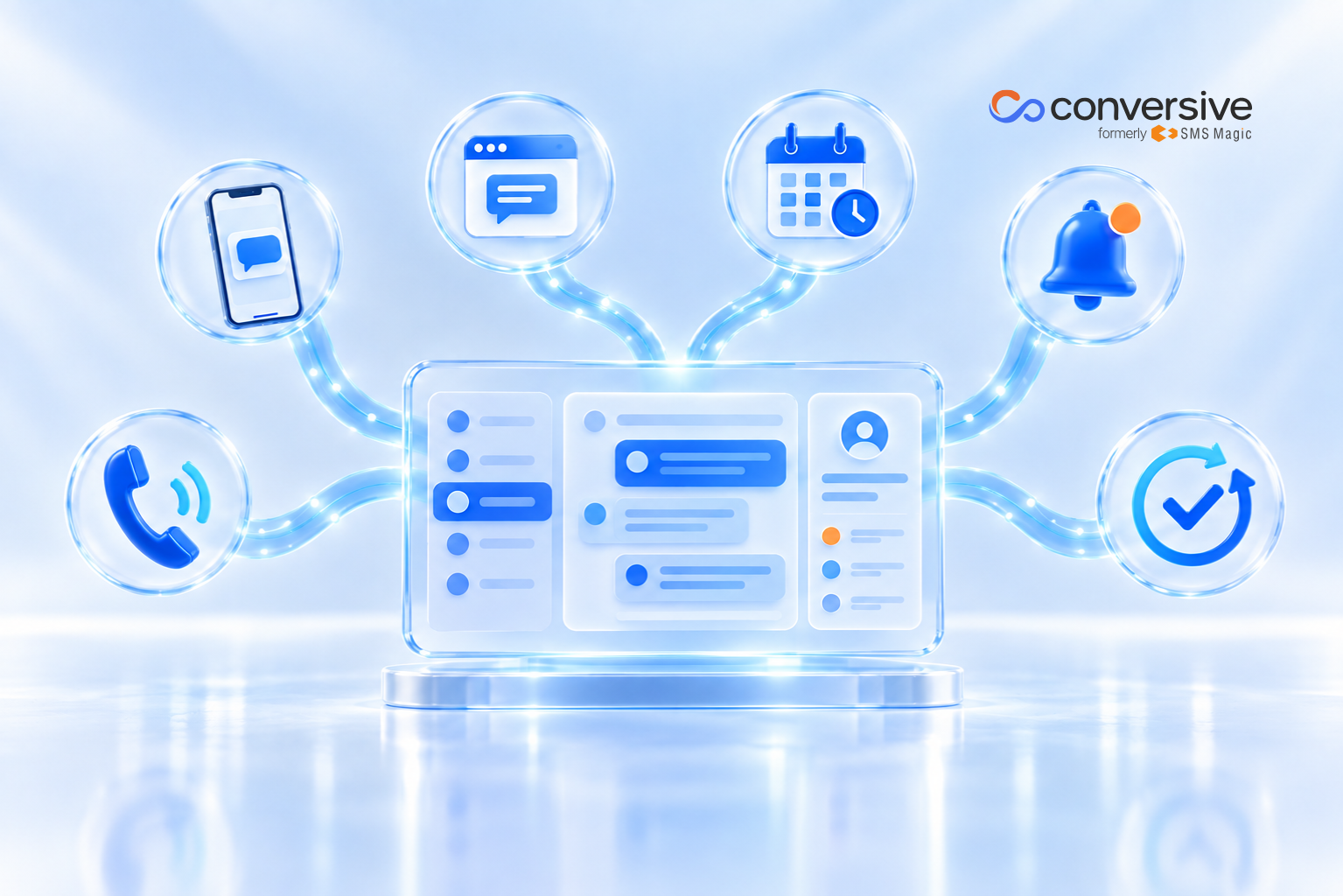
Conversive isn't built to be another channel, or another inbox layered on top of the ones a hospital already has. It is a demand conversion platform to enforce the Continuous Conversation Principle across the channels that already exist, web, WhatsApp, phone, email, SMS, and more, so that every patient inquiry stays in one thread, with one owner, resolving to one of exactly two outcomes: booked, or documented as closed-lost.
That means a web inquiry that continues on WhatsApp doesn't restart. An after-hours or weekend message from a patient doesn't sit unanswered until the next business day. It is captured and qualified immediately.
A patient who calls after messaging isn't starting a new interaction, they're continuing the same one, with full context intact for whoever picks it up. The objective is recovering the specific, measurable revenue that already-paid-for demand represents, by making sure no inquiry can disappear between the channels a hospital has built.
See What a Continuous Conversation Workflow Looks Like
Many healthcare communication stacks fail because none of those channels are held to a standard that guarantees every conversation resolves to a real outcome. Connection was never the finish line, it is the starting condition.
Conversive helps close this gap. It works with the communication channels that a hospital already uses and connects them into one continuous conversation. Using the Continuous Conversation Principle, every patient inquiry has one accountable owner and continues until it reaches one of two outcomes: the patient books an appointment, or the inquiry is documented as lost if it does not result in a booking. This helps hospitals avoid missed opportunities and ensures that patient conversations are properly managed from beginning to end.
This isn't another channel to manage or another inbox to check. It's the layer that makes every channel already in place actually accountable for the revenue it was meant to capture.
.png)
Frequently Asked Questions
What is the Continuous Conversation Principle in healthcare communication?
The Continuous Conversation Principle ensures that every patient inquiry remains one continuous conversation from first contact to a defined outcome, regardless of whether the patient switches between channels like the website, WhatsApp, phone, or email. It combines one conversation, one accountable owner, and one measurable outcome to prevent patients from being lost during hand-offs.
Why isn't a unified inbox enough to improve patient conversions?
A unified inbox centralizes messages from multiple channels, making them easier for staff to view. However, it doesn't guarantee timely follow-up, ownership, or appointment completion. Without accountability for every inquiry until it results in a booking or documented loss, patient conversations can still go cold and revenue opportunities remain lost.
How do disconnected patient conversations affect hospital revenue?
Every patient inquiry represents marketing investment that's already been made through advertising, referrals, or brand-building. When conversations break because of missed follow-ups, after-hours gaps, or channel switching, hospitals lose appointment opportunities, resulting in underutilized clinical capacity and lower returns on patient acquisition investments.
How does Conversive improve patient communication and access?
Conversive applies the Continuous Conversation Principle across existing communication channels, ensuring every inquiry stays connected throughout the patient journey. It captures after-hours inquiries, maintains conversation history across channel switches, automates follow-up, and keeps every patient interaction moving toward a booked appointment or a clearly documented outcome, helping hospitals improve both patient access and revenue conversion.


.avif)